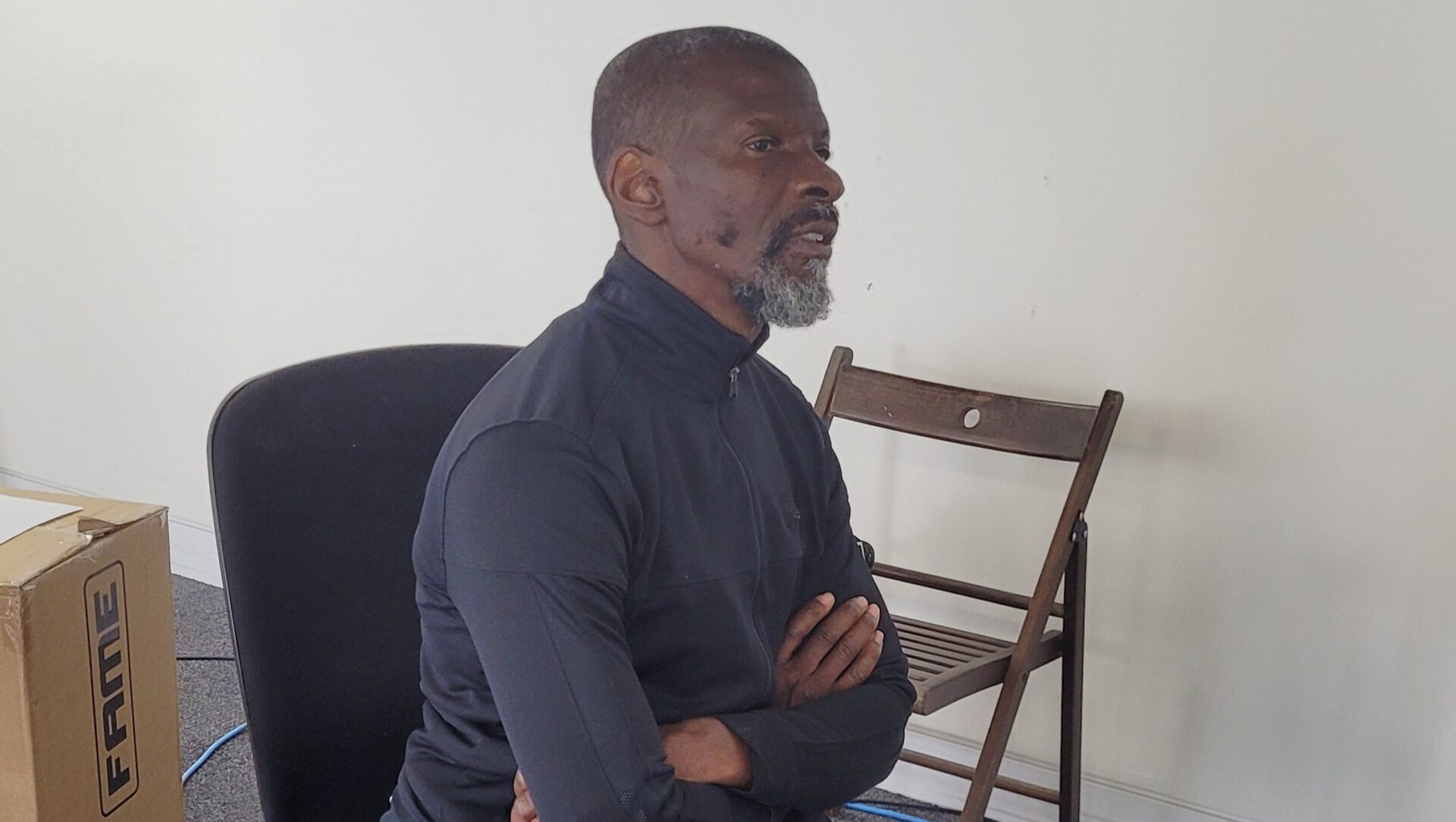
Red Ladder Theatre Company and mad dogs dance theatre present: TAXI- an interview with the Co-directors Rod Dixon and Douglas Thorpe
Written by Andrea Heaton, Co-directed by Rod Dixon and Douglas Thorpe, based on an original concept by Douglas Thorpe
Taxi is a brand-new premiere from Red Ladder Theatre Company & mad dogs dance theatre, what can audiences expect from this piece of dance and drama?
Rod: I want us to blow away expectations. I mean audiences may have expectations from previous Red Ladder work, but want the audience to be surprised, to be given a spectacle they’ll never forget, this is visceral. People who don’t like dance or theatre will hopefully be reached, TAXI may well intrigue people. We want to bring in people who don’t normally go to see theatre or dance. For us, success will be them leaving after seeing the show and saying: ‘I wasn’t expecting that at all!’
Doug: Agreed. The worst thing would be that we created nothing new, or what the audience expected. We don’t want to replicate what people have done before – that’s what the arts are about, creating something new. Something different. We don’t want to be repeating ourselves.
Rod: Yeah absolutely… I worked with a theatre group considered by critics and audiences to be exciting, yet they were producing exactly the same stuff that they’d been producing 30 years ago. For me, that formula doesn’t work if you don’t stretch yourself as an artist.
We’d seen it all before, using the same stuff, and this collaboration we’re doing now is partly because we both wanted to work outside of our comfort zone. Perhaps in a way that isn’t safe but that’s the endless struggle of art and theatre; how can you take a risk if you need to follow a business plan and if you’re creating art solely for profit, then it isn’t really art.
If we make audiences come out feeling a little uncomfortable, and maybe younger audiences might not have seen anything like this before, live.
Doug: A lot of the script is based on all of the people that I met when I was a taxi driver. It’s all of their stories that I heard, and we are retelling those stories. Some of them are a little more direct and they are also the stories of those people that you don’t get to hear from. That’s what really appealed to me, to be able to share all of those voices that you don’t usually get to hear. And it is not all doom and gloom, it was beautiful to meet someone…
Rod: It’s a slice of urban life, something surreal, but then what you can see out of your car window, and sitting in your taxi at 1 am, CAN be surreal.
Q: It’s quite dark subject matter, what was the inspiration for this piece?
Doug: It isn’t all dark though because sometimes you meet people who are beautiful and so full of life, who you can have great communication with and that’s the perfect scenario of what a taxi driver can experience in a single day.
As a creator, I’ve made pieces of work but not really understood them. But with Taxi, you’d meet people who were clearly struggling financially, yet those were the sort of people who would give you a tip. Couldn’t believe the amount of time you’d pick up people who were clearly financially well endowed, but one of the reasons for that is that they are so well off is because they are greedy and inconsiderate of anyone else.
Yet it is often those that are struggling, that are the most generous and recognise the job that you are doing and are grateful for it. And in TAXI, I think I wanted to capture all of those people, all levels of the human spirit and to capture their voices and share their stories.
Rod: What we are looking at is the everyman and the audience will go away and reflect on their own life and how they leave a mark. The whole thing is about what is life and death, what is the point. People want to leave a mark, but the reality is, that not everyone has ‘statutes’ dedicated to them. How much do people accept just being a benefit to others being enough in life? People aren’t comfortable that things might fail. It’s not so much dark as deep, there’s a depth we are trying to reach, and it’s going to be a challenge. And it might not work!
Doug: That really scares me as an artist because I can be in situations where I can’t afford to fail. I have to go back to things that I know can be successful. So I get pushed into the corner of repeating things. It helps to be in a situation where we recognise that failure is healthy.
Rod: Hopefully, those failures happen in rehearsal. But I’ve been doing this for years and you never know how the audience is going to respond. Opening night is still nerve-racking. You can’t control how people will react. It’s a bit like rock climbing, you’re hanging on by your fingernails a lot of the time. Doug and I are really experienced about what we do and we are bringing our individual experiences and melding them together.
Doug: Yes we’re hoping that our separate audiences will be brought together to enjoy TAXI, though I never know how people will react.
Q: How has the collaboration between the writer Andrea Heaton and Doug and Rod as co-directors worked?
Rod: Andrea is taking the bigger risk, as we’re going to have to interpret her works. Although Andrea has worked with the experimental theatre before with Imitating the Dog. The other collaboration is of course, with the five performers too. They are all really interesting artists in their own right and we’re really excited to see what they will bring to the production.
Douglas: Yes, they all have some great experience and we’re really looking forward to the new ideas that they can bring. They will be adding their own influences and ideas to develop the physical aspect of TAXI.
Q. Leeds is an actual part of the performance of TAXI, are there aspects specific to the city or could this be any urban centre in the North of England?
Rod: I’d go further than that and say it could be any urban landscape in the world. The themes are universal, how we trust or mistrust people, how we are out for ourselves or not. The Taxi driver is almost a philosopher, this is set in a city centre but really it could be anywhere.
Doug: Yes, I agree it could be set anywhere. We all have desires and feelings, whether old or young. The beautiful thing about being a taxi driver is you see people. People can come looking and dressed a certain way and you make assumptions about them when they get into the car, and then turn out to be completely different to how you expect.
Rod: Also our community chorus is an important part as they are playing the role of the city as a mass of people that surrounds us all. We want to give people the opportunity of being in something experimental and being part of the big stage picture.
Q. Doug, we understand that you were a Taxi driver, are there elements of this piece that relate to the invisibility or isolation of being a taxi driver?
Doug: I’ve been in a couple of situations where I wanted to escape but couldn’t. Where I have felt vulnerable or could be attacked. A taxi driver has to be a politician to dodge a situation or sometimes even a comedian to diffuse a situation. You really have to give credit to taxi drivers as they have to think on their feet whilst being confined in a tiny box on wheels.
You have to deal with the aftermath of the situation after someone leaves your car and try not to take it home to my wife. Some taxi drivers only last a couple of years, and I can understand why, as psychologically, the job can really affect you.
Q. Would you hope that audiences react differently/considerately to taxi drivers once they have experienced this piece?
Doug: Yes and no to some degree. Perhaps as our audience leave they may think about how they’ve behaved to taxi drivers previously and maybe even recognise themselves within the art.
We relate to taxi drivers in a particular way and tell them stuff we wouldn’t tell our closest family. I guess that the thought process is that you’re not going to see them again, and people sometimes tell them things just to see his reaction. Almost like a Confession at church.
Rod: The Taxi driver is also the only character within the piece that breaks the fourth wall. There are three worlds within TAXI, the real world, the play world and then the world within his own head.
Q. There are a number of films referenced in TAXI, are you film buffs?
Rod: Not really. Thelma and Louise maybe, I like the feminist statement where they drive off the Grand Canyon as a two-fingered gesture to the patriarchy. I suppose in Taxi, our two characters in the play find that they have a connection through film.
Doug: My favourite director is Tarantino. But I also like Scorsese and he did Taxi Driver with Robert De Niro. We might see a De Niro character in TAXI.
TAXI appears at The Old Woollen, Sunnybank Mills, 83 – 85 Town St, Farsley, Leeds
THURS 10 AUG (Preview Tickets) £13 + BOOKING FEE
FRIDAY 11 AUG – SUN 20 AUG (various times) £15 + BOOKING FEE
Performance Guidance suitable for ages of 13+
Captioning is available via The Difference Engine, a tool that enables d/Deaf and hard-of-hearing people to read performance captions on their phone.
For Tickets Book Here